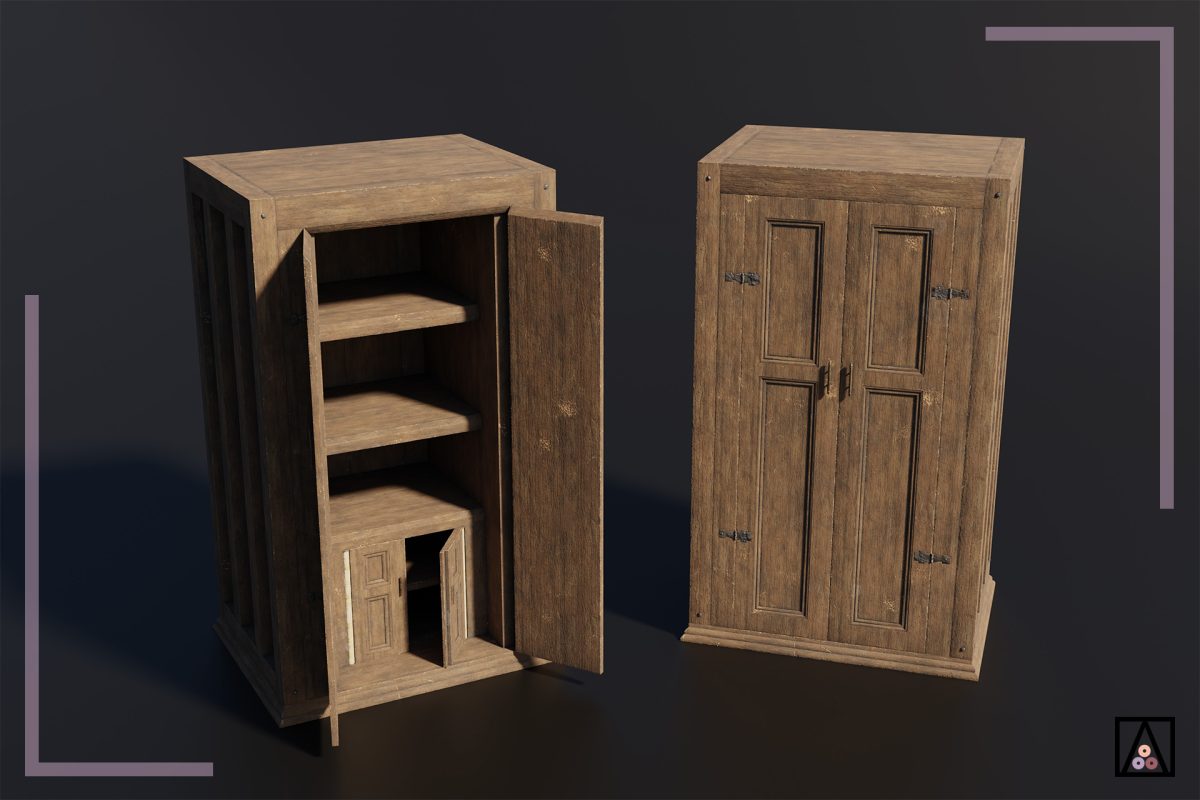
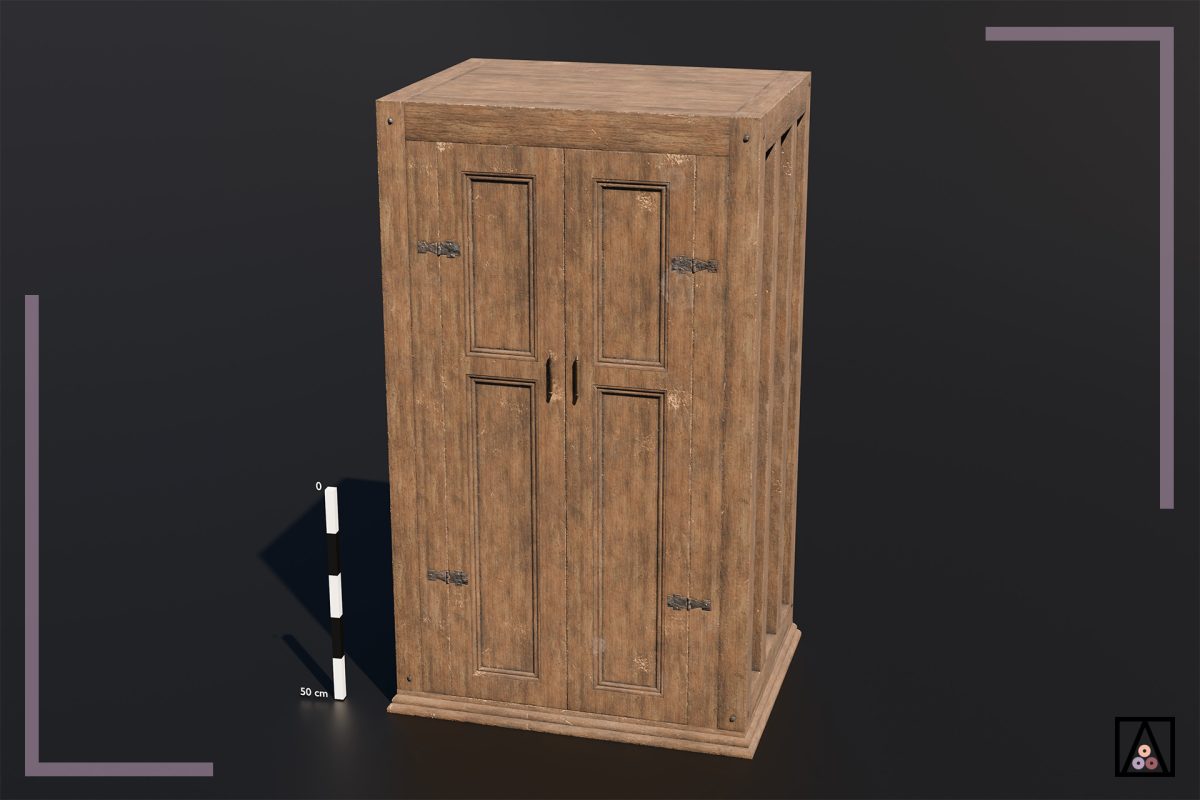
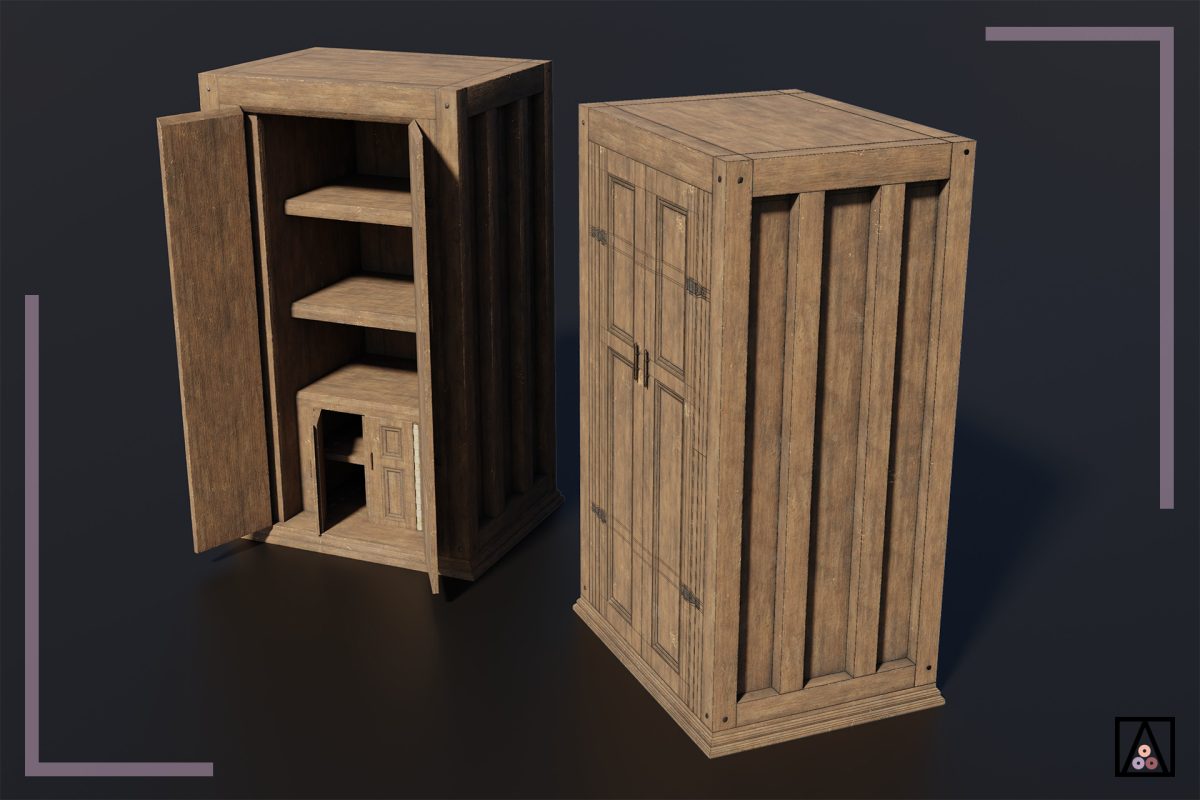
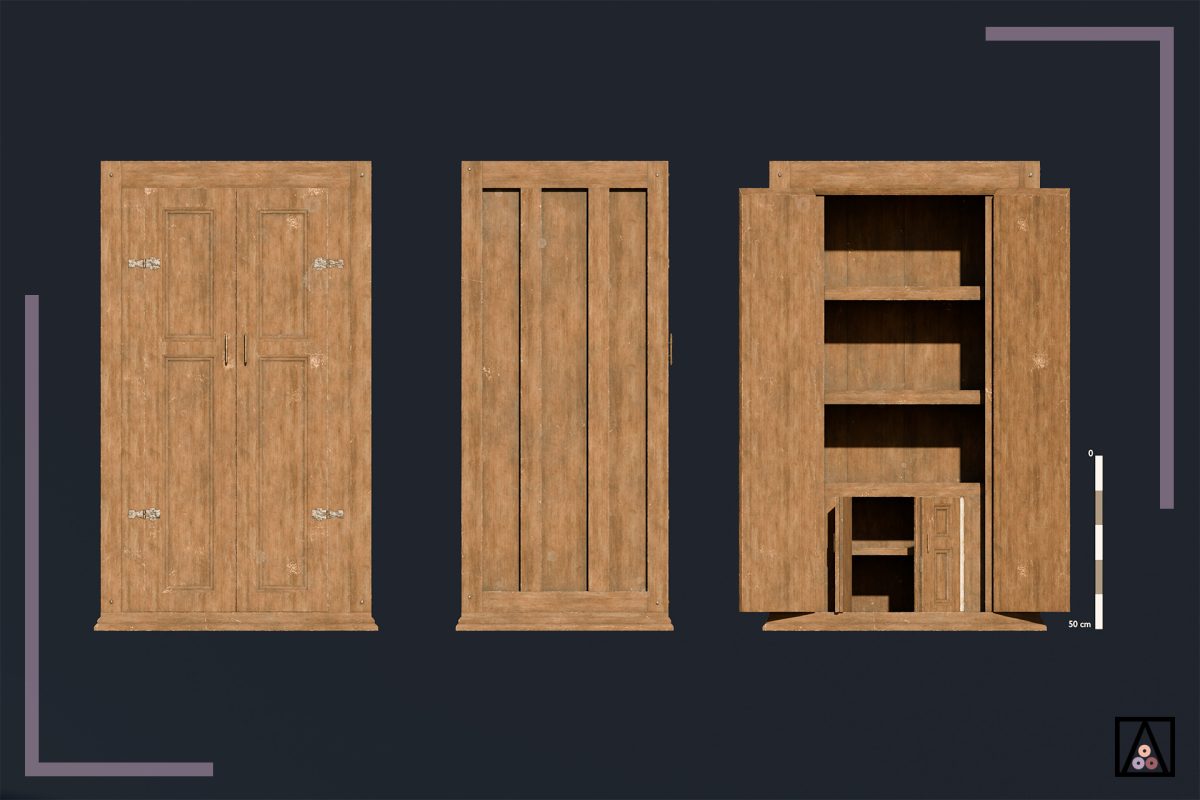
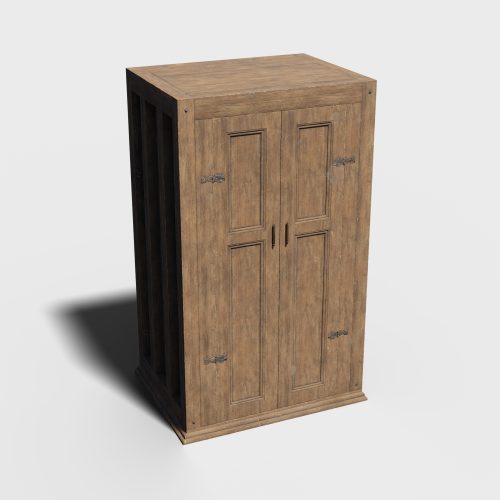
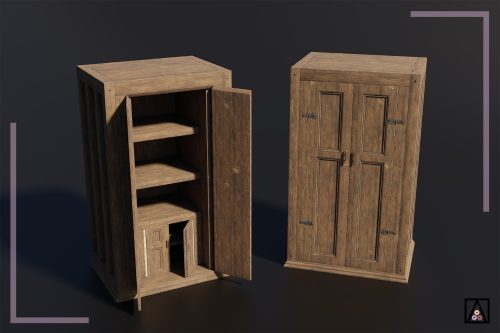
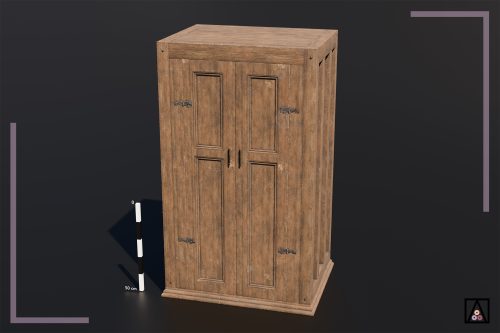
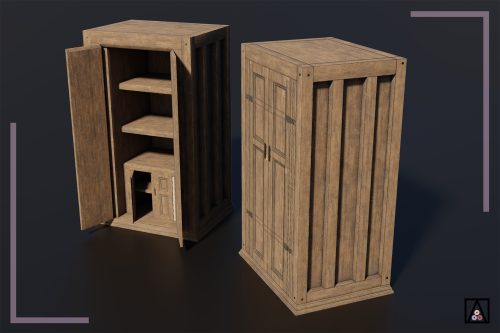
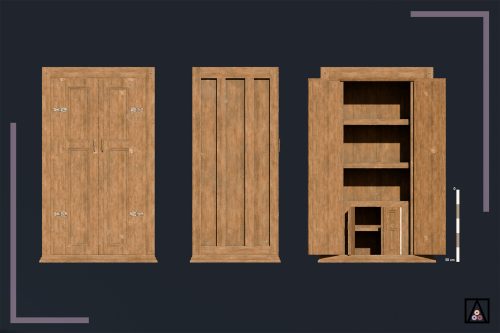


3D reconstruction of a cupboard found in the city of Herculaneum. The Latin term armarium originally indicated that the piece of furniture contained tools, but later it was also used to refer to household storage. They could feature decorative fittings in different materials (bronze, silver), and the technique of veneering with other tree species could be used to ennoble less valuable woods. The discovery of this cupboard in a service area such as the kitchen allows us to hypothesize its use as a sideboard or pantry cupboard. Similar examples of storage furniture have been found in Pompeii and Boscoreale.
LOD0: 168K Poly / 337K Tris
LOD1: 57K Poly / 93K Tris
LOD2: 18K Poly / 25K Tris
LOD3: 7K Poly / 14K Tris
Game Ready Model
Formats: .FBX; .OBJ; .blend.
PBR materials (JPG/PNG)
Texture maps: Base Color, Normal Map, Metallic, Roughness, AO, Height.
Texture resolution: 1K, 2K and 4K.
Rigged: No
Animated: Sí
Mask for color alternatives: No
Desirée García Espinosa
CONNOLLY, P. (1979): Pompeii.
Croom, A.T. (2007). Roman Furniture. Stroud, Gloucestershire, Great Britain. Tempus.
HUNGERFORD POLLEN, John (1820-1902): Ancient and Modern Furniture and Woodwork. Published for the Committee of Council on Education by CHAPMAN AND HALL, 193, PICCADILLY
MOLS, S. (2008): "Ancient roman household furniture and its use: from Herculaneum to the Rhine", AnMurcia, 23-24, pp. 145-160.
MOLS, S. T.A.M. (1999): "Wooden Furniture in Herculaneum: Form, Technique and Function". Circumvesuviana 2. Ámsterdam: Gieben.
RICHTER, G.M.A. (1966): "The Furniture of the Greeks, Etruscans, and Romans". Phaidon. Londres.
In this link you can download the work of HUNGERFORD POLLEN, John https://www.gutenberg.org/ebooks/54602
More information on this furniture can be found at:
https://catalogo.beniculturali.it/detail/ArchaeologicalProperty/1500903485